In May 2014 We Own it highlighted growing anger against Serco, who were under investigation for defrauding the public purse, were still allowed to bid for public work.
A poll, carried out by Survation for campaign group We Own It, showed an increase in support for public services being run by government when companies are found guilty of mismanagement or defrauding taxpayers.
The new polling shows that outsourcing companies like Serco, Atos, Capita and G4S have the lowest levels of trust compared to other organisations like central government and the civil service.
The full article with links to the poll can be found here.

Monday, 30 May 2016

Sunday, 14 February 2016
Out Source Shared Services and Corporate Functions at any cost
On the 11th February 2016 the Ministry of Defence (MOD) in a message to all staff working in Defence Business Services (the MODs corporate and personnel shared service function) announced that they ‘would bring in a contractor to act as our partner
in running DBS as a whole’ under a new contracting model called ‘Corporate Services Integration and
Innovation Provider’.
It would appear that the option of DBS being run by the public sector in the defence interest has been written off. Instead the MOD would rather throw good money after bad after not learning any lessons from its already well documented contracting failures.
The drive to privatise government shared services has resulted in bad decisions that have cost the public purse millions of pounds in undelivered savings, increased change costs and all at no risk to the private sector who continue to walk away with payments for outputs the civil service and public sector could have delivered, and delivered more.
Over the coming months we will be documenting evidence to back our position that corporate and shared service functions currently in the MOD should remain in the MOD if real value and security in delivering defence outputs is to be achieved.
It would appear that the option of DBS being run by the public sector in the defence interest has been written off. Instead the MOD would rather throw good money after bad after not learning any lessons from its already well documented contracting failures.
The drive to privatise government shared services has resulted in bad decisions that have cost the public purse millions of pounds in undelivered savings, increased change costs and all at no risk to the private sector who continue to walk away with payments for outputs the civil service and public sector could have delivered, and delivered more.
Over the coming months we will be documenting evidence to back our position that corporate and shared service functions currently in the MOD should remain in the MOD if real value and security in delivering defence outputs is to be achieved.
Sunday, 22 November 2015
Strategic review or cost cutting smoke and mirrors?
In The Guardian’s article ‘UK ministers turn on defence critics’ today, the political smoke and mirrors of Whitehall and the Ministry of Defence are clear.
Restating or re-announcing currently agreed troop deployment and engagement or procurement spending as part of the 2% GDP defence spend is nothing more than a ruse.
Our concerns were voiced by a speaker in a recent Lords debate on defence. “I deplore targets in this because I believe that it is only sensible to base defence spending on what the defence of the realm requires”, said the former general and chief inspector of prisons, Lord Ramsbotham.
He added: “Without having a national security strategy on which an SDSR [strategic defence and security review] can be based you have no idea when you are going into these sums whether you have what is required.”
George Osborne on the Andrew Marr show said "Every public service has to make sure it is spending its money well."
We agree.
The development of Whole Force deployment in delivering our defence needs is based on utilising the right people with the right skills at the right time to deliver strategic, proiritised, value for money outputs. If you remove or diminish the capability and capacity of any of the military or civilian components you will increase the likelihood of deployment failure and delivery costs.
Year on year civil servants within the Ministry of Defence have supported the front line delivering value for money defence outputs and savings.
We would like to be confident that our politicians, senior civil servants and military colleagues in Whitehall and the Ministry of Defence understand this and have ‘battled’ to protect the value and flexibility of delivering our defence needs through the Whole Force model.
Somehow, we doubt it. The political smoke and mirrors of Whitehall politics currently obscures the sacrificial lamb, but sacrificial victims there will be.
Restating or re-announcing currently agreed troop deployment and engagement or procurement spending as part of the 2% GDP defence spend is nothing more than a ruse.
Our concerns were voiced by a speaker in a recent Lords debate on defence. “I deplore targets in this because I believe that it is only sensible to base defence spending on what the defence of the realm requires”, said the former general and chief inspector of prisons, Lord Ramsbotham.
He added: “Without having a national security strategy on which an SDSR [strategic defence and security review] can be based you have no idea when you are going into these sums whether you have what is required.”
George Osborne on the Andrew Marr show said "Every public service has to make sure it is spending its money well."
We agree.
The development of Whole Force deployment in delivering our defence needs is based on utilising the right people with the right skills at the right time to deliver strategic, proiritised, value for money outputs. If you remove or diminish the capability and capacity of any of the military or civilian components you will increase the likelihood of deployment failure and delivery costs.
Year on year civil servants within the Ministry of Defence have supported the front line delivering value for money defence outputs and savings.
We would like to be confident that our politicians, senior civil servants and military colleagues in Whitehall and the Ministry of Defence understand this and have ‘battled’ to protect the value and flexibility of delivering our defence needs through the Whole Force model.
Somehow, we doubt it. The political smoke and mirrors of Whitehall politics currently obscures the sacrificial lamb, but sacrificial victims there will be.
Saturday, 21 November 2015
To Cut or not to Cut - that is the question?
As we anxiously await the Strategic Defence and Security Review 2015, the details of which will be announced on Monday 23rd November, our thoughts turn to the comments around the need to maintain a credible defence capability that is both effective and efficient.
The BBC News reported in June that:
The US defence secretary says he fears the UK could become "disengaged" if it makes further cuts to defence spending.
Ashton Carter told the BBC Britain had "always punched above its weight" and "it would be a great loss to the world if it now took action that would indicate disengagement".
The UK government said it was committed to meeting Nato's target of spending 2% of GDP on defence this financial year.
But it says future budgets will be determined in the next spending review.
Mr Carter's comments follow similar remarks earlier this year by the head of the US Army, General Raymond Odierno, who warned further cuts could see British units operating within US ranks, rather than divisions working alongside each other.
Julian Lewis, Conservative MP for New Forest East, told BBC Radio 4's The World at One
that 2% spending on defence "is not a target, it's a minimum" and any possibility that level may drop was "frankly staggering".
"The international situation is darkening and what we must avoid at all costs is having to spend the money later when a crisis has arisen, when by spending it now we might help deter people from provoking such crisis," he said.
The cross-party Defence Select Committee also argued recently that the rise of Islamic State and the increase in Russian aggression meant Britain's 2010 defence plans "no longer reflect the new threats to peace around the world".
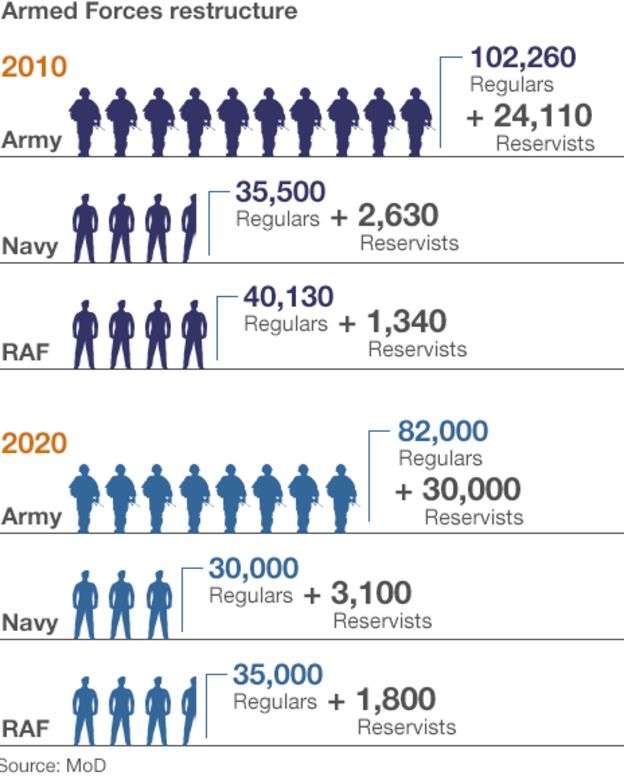
Over recent years to value of civilian staff supporting and enabling our armed forced has been put forward as the cost effective Whole Force operating model.
Just yesterday in a leaked letter, one of the UK's most senior police officers voiced their concern that the cuts expected to the police forces in next week's Spending Review could "reduce very significantly" the UK's ability to respond to a Paris-style attack.
When the public believe we need resources in defence and security to safe guard them against acts of aggression, it will be interesting to see where politically both the government and senior civil servants have decided where the axe will fall in MOD.
Whatever cuts are announced in MOD they will result in a reduction in our defence capability and flexibility and people losing their jobs.
The BBC News reported in June that:
The US defence secretary says he fears the UK could become "disengaged" if it makes further cuts to defence spending.
Ashton Carter told the BBC Britain had "always punched above its weight" and "it would be a great loss to the world if it now took action that would indicate disengagement".
The UK government said it was committed to meeting Nato's target of spending 2% of GDP on defence this financial year.
But it says future budgets will be determined in the next spending review.
Mr Carter's comments follow similar remarks earlier this year by the head of the US Army, General Raymond Odierno, who warned further cuts could see British units operating within US ranks, rather than divisions working alongside each other.
Julian Lewis, Conservative MP for New Forest East, told BBC Radio 4's The World at One
that 2% spending on defence "is not a target, it's a minimum" and any possibility that level may drop was "frankly staggering".
"The international situation is darkening and what we must avoid at all costs is having to spend the money later when a crisis has arisen, when by spending it now we might help deter people from provoking such crisis," he said.
The cross-party Defence Select Committee also argued recently that the rise of Islamic State and the increase in Russian aggression meant Britain's 2010 defence plans "no longer reflect the new threats to peace around the world".
Over recent years to value of civilian staff supporting and enabling our armed forced has been put forward as the cost effective Whole Force operating model.
Just yesterday in a leaked letter, one of the UK's most senior police officers voiced their concern that the cuts expected to the police forces in next week's Spending Review could "reduce very significantly" the UK's ability to respond to a Paris-style attack.
When the public believe we need resources in defence and security to safe guard them against acts of aggression, it will be interesting to see where politically both the government and senior civil servants have decided where the axe will fall in MOD.
Whatever cuts are announced in MOD they will result in a reduction in our defence capability and flexibility and people losing their jobs.
Thursday, 5 February 2015
More Reasons to be a PCS member
Member benefits

Unions' legal challenge sees off punitive DfT sick policy
PCS and other civil service unions have successfully challenged plans to unilaterally impose a new 'seriously detrimental' sickness absence policy at the Department for Transport.
The High Court ruled on Tuesday (3 February) that the DfT broke employees’ contracts by failing to reach agreement with recognised unions PCS, Prospect and the FDA before changing its absence management procedures.
Our argument for these workers was that DfT staff terms and conditions and conditions of service are contractual and are described as such in their staff handbook. On that basis new sickness absence arrangements could not be imposed and needed to be subject to a collective agreement, which did not exist, or individual agreement to vary terms, which was not sought.
The 3 unions brought breach of contract claims against the DfT on behalf of members in the central department and its agencies in November 2014. The other organisations are the Highways Agency, Driver and Vehicle Licensing Agency, Driving Standards Agency, Maritime and Coastguard Agency, Vehicle Certification Agency and Vehicle and Operator Services Agency.
Staff handbooks for the DfT and its agencies each set out employees’ terms and conditions, with individual agencies able to adopt different policies on matters such as leave, attendance and absence. However, the central DfT handbook says the contract of employment cannot be changed without agreement from either the employees or recognised unions.
Our argument for these workers was that DfT staff terms and conditions and conditions of service are contractual and are described as such in their staff handbook. On that basis new sickness absence arrangements could not be imposed and needed to be subject to a collective agreement, which did not exist, or individual agreement to vary terms, which was not sought.
The 3 unions brought breach of contract claims against the DfT on behalf of members in the central department and its agencies in November 2014. The other organisations are the Highways Agency, Driver and Vehicle Licensing Agency, Driving Standards Agency, Maritime and Coastguard Agency, Vehicle Certification Agency and Vehicle and Operator Services Agency.
Staff handbooks for the DfT and its agencies each set out employees’ terms and conditions, with individual agencies able to adopt different policies on matters such as leave, attendance and absence. However, the central DfT handbook says the contract of employment cannot be changed without agreement from either the employees or recognised unions.
Changes imposed
In late 2011, the DfT wanted to introduce a uniform attendance management policy across the core department and all agencies, and walked away from talks with the unions. Despite this, in July 2012, the department imposed a new blanket attendance management procedure.
This introduced new formal and informal ‘trigger points’ for absence management:
This introduced new formal and informal ‘trigger points’ for absence management:
- Absences of 5 working days or three occasions in a rolling 12-month period would require mandatory informal action.
- Absences of 8 working days or four occasions in a rolling 12-month period would require a first written warning and then a final written warning, possibly leading to dismissal.
PCS general secretary Mark Serwotka welcomed the ruling: "This case proves the importance of taking legal action to defend and preserve members' hard-fought terms and conditions in the face of management's illegal attempts to undermine them. The already over-stretched staff who bare the brunt of these vindictive policies are often those who suffer chronic illnesses and suffer anxiety because of the threat of disciplinary action."
PCS DfT president Paul Williams said: "This is in an overwhelming judgement in our favour, and a vindication of members' determination on this issue. We now urge the employer to get back in to proper talks with the unions on a non-detrimental sickness policy that covers all DfT agencies."
PCS DfT president Paul Williams said: "This is in an overwhelming judgement in our favour, and a vindication of members' determination on this issue. We now urge the employer to get back in to proper talks with the unions on a non-detrimental sickness policy that covers all DfT agencies."
Judge’s ruling
The judge, Mr Justice Globe, said the claimants should be granted declarations that the DfT and its agencies had breached their contracts of employment by not seeking consent from the recognised unions before unilaterally imposing the new sickness absence policy.
He said that new procedures were fundamentally different to the old ones and would be seriously detrimental to employees.
He cited two examples:
He said that new procedures were fundamentally different to the old ones and would be seriously detrimental to employees.
He cited two examples:
- a DSA employee who continued to work despite having been struck on the head by a defective door handle and knocked unconscious for a period.
- a DVLA employee who came into work with his nine-month old child because his wife was ill and he could not get help with childcare.
He ruled that:
- the old procedures and policy would continue to apply
- the new procedures could not vary contracts of employment and were not contractually binding
- by imposing the new terms, the DfTand its agencies had committed an anticipatory breach of contract
- if the new procedures are applied to individuals, the DfT and its agencies will commit a breach of contract.
Thursday, 29 January 2015
This government is using the state as a union buster

This government has launched an ideological attack on a TUC-affiliated union. This union-busting has so far gone unnoticed by much of the media, after all it’s not happening during a long national dispute or general strike. It’s behind the scenes, but its aim is to silence a prominent critic of austerity: PCS.
For decades the way in which civil service workers paid their union subs has been through automatic deduction from their pay packet. This scheme, known as check-off, survived unscathed from 18 years of Thatcher and Major, and 13 years of Blair and Brown.
But now, directed by Cabinet Office minister Francis Maude, government departments and agencies have given us minimal notice that they will redraw the scheme. They say this is to save money – and why should the government subsidise a trade union’s membership collection? Many large businesses operate a similar scheme too, it costs little to administer and we offered to pay it. They refused.
They refused because this seemingly small technical change is an ideological attack, an attempt to break our union financially and weaken us industrially.
It means that we have to re-sign up three-quarters of our membership – over 150,000 people. They clearly thought this would break us – as it might a lesser union – but our reps and members have risen to the challenge. In just a few months we have signed up 73% of our membership in the Home Office – one of the first departments to announce it would end the scheme. But even that remarkable sign-up rate – one that no union has ever been asked to or managed to deliver – means we will lose thousands of members and thousands of pounds in revenue.
Over the coming months, more and more departments – from the DWP to HMRC – will withdraw check-off in an attempt to break our union. This has been accompanied by a document leaked to us from one department which showed senior management planning to “marginalise PCS”, slash the facility time of key reps, and support the setting up of a compliant staff association.
This is union-busting pure and simple, and fits with a pattern we have encountered in other civil service departments. And of course it fits with the Tories’ recent announcements about new balloting rules to limit democratic strike action. Being targeted is in some ways a badge of honour; we have been one of the leading voices communicating an alternative to austerity, and played a major role within the TUC in building co-ordinated action across the public sector – unafraid to take on Tory leaders in the media.
Their attack won’t silence or beat us. We have had to take some tough decisions, and have re-structured our union to respond to the immediate mammoth organising task and to cope with the financial fall-out.
PCS will survive, but we are asking for your help. We want everyone to email their MP to tell them to support our campaign and to urge Cameron and Maude to retain check-off. In your trades council, let local PCS colleagues know you are ready to help them in whatever way they need. If you have contacts with the Labour frontbench, contact them to pledge to restore check-off if they win in May.
We are under attack for standing up to this government and its austerity programme, but with your support and solidarity we can come through this period stronger. A weaker PCS means a weaker trade union movement – so I hope together we can resist this attack, resist austerity and kick out this union-busting government.
• See www.pcs.org.uk/stopunionbusting for more on how you can help the PCS campaign against union-busting
Wednesday, 28 January 2015
Stress
Stress, as defined by the Health and Safety Executive (HSE), is the adverse reaction people have to excessive pressure or other types of demand placed on them.
Pressures can come from inside or outside the workplace, or a combination of both.
PCS firmly believe that employers should not try to distinguish between work-related and external pressures - if the result is affecting work performance, employers should be trying to help.
Tackling causes of stress
PCS policy is to deal with stress by removing, or controlling, the causes of stress at work.
This means ensuring, for example, that targets are set with input from staff and are achievable and that clear and effective procedures exist to deal with bullying and harassment in the workplace.
However, securing such progress can take time and knowing that such aims are being pursued does not helpwhen someone feels under excessive pressure.
What is needed then are more immediate solutions, to bring down pressure levels and avoid longer-term health problems that can result from sustained periods of stress, for example, insomnia, anxiety and depression or heart and gastrointestinal problems.
What to do if you feel stressed at work
1) Remember that stress is not a personal weakness nor is it 'your fault' - employers have a legal duty to protect your health and safety at work.
2) Try to work out what is causing the pressures.
2) Try to work out what is causing the pressures.
Stress can be caused by poor working environment, factors include:
- noise
- temperature
- ventilation
- humidity
- lighting levels
It can also be affected by organisational issues such as:
- lack of job security
- poorly planned changes at work
- inadequate resources
- inadequate or unclear communications
Job design can also be an issue that can cause stress. Factors to be aware of include:
- unrealistic targets
- too much or too little work
- inadequate training
- fear of violence or abuse
Relationships at work can also cause stress. Are you facing problems such as:
- harassment
- discrimination
- bullying
- conflict between home and work responsibilities.
3) Don't ignore the issues - they won't just go away.
Talk to your union representative. enlist their aid in securing improvements - it may not only be you experiencing pressure from the same causes. You may need their support to take forward grievance or other complaint procedures especially if you are being harassed, bullied or discriminated against.
Talk to your union representative. enlist their aid in securing improvements - it may not only be you experiencing pressure from the same causes. You may need their support to take forward grievance or other complaint procedures especially if you are being harassed, bullied or discriminated against.
Talk to your line manager, either yourself or with or through your union rep. Some employers have procedures to tackle stress-related issues, such as overwork; if it is a training issue, additional support may be available.
Go and see your GP, if you have concerns about stress affecting your health; don't be tempted to put your well-being at risk, such as by stopping taking breaks from VDU work or taking other shortcuts in safe working procedures
Be alert to possible changes of behaviour that stress can cause - increased smoking, drinking, poor sleep patterns.
Union-busting at the heart of government
Conservative ministers have launched a campaign of union-busting at the very heart of government. Their actions show how the Tories will attack union rights across the whole public sector if they form a government after the election. But their actions also give the green light to employers to go on the offensive against unions across the UK.
Our movement represents millions of voters, their families and communities. We all need strong unions and need to put our rights at the centre of the 2015 general election.
Please support our campaign – write to your MP and ask them to commit to support trade union rights in under this and the next government
Thursday, 13 November 2014
Check-off to end - act now to protect your union membership
All members must act now to stop the department effectively cancelling your membership without your permission and by signing up for direct debit you could win £1,200.
This notice from the MoD will effectively cease your trade union membership, unless you take action to safeguard it.
A political attack
We made strong arguments to stop the department ending check-off and also made the case for a longer notice period, but the department chose to ignore our legitimate concerns. Trade unions are being singled out as charities and other organisations will continue to enjoy check-off.
PCS general secretary Mark Serwotka said: "This is an unnecessary political move by the Tories, but we’ll not let them undermine us. Please sign up today to help our union remain a strong and independent advocate for members."
Act now to protect your membership
You can help secure our future, remain a PCS member and stay protected at work against an increasingly hostile employer by giving our union your direct debit details now.
We need as many members as possible to act now, so that we can guarantee a smooth transition and continuity of membership as check-off is withdrawn.
Your bank details will be held securely on our union’s systems, which are compliant with data security procedures.
There is no advantage to leaving things until the last minute. You won’t end up paying twice, or paying more, but you could end up without the protection of your union.
Sign up and ask a colleague toregister their details, too.
This notice from the MoD will effectively cease your trade union membership, unless you take action to safeguard it.
A political attack
We made strong arguments to stop the department ending check-off and also made the case for a longer notice period, but the department chose to ignore our legitimate concerns. Trade unions are being singled out as charities and other organisations will continue to enjoy check-off.
PCS general secretary Mark Serwotka said: "This is an unnecessary political move by the Tories, but we’ll not let them undermine us. Please sign up today to help our union remain a strong and independent advocate for members."
Act now to protect your membership
You can help secure our future, remain a PCS member and stay protected at work against an increasingly hostile employer by giving our union your direct debit details now.
We need as many members as possible to act now, so that we can guarantee a smooth transition and continuity of membership as check-off is withdrawn.
Your bank details will be held securely on our union’s systems, which are compliant with data security procedures.
There is no advantage to leaving things until the last minute. You won’t end up paying twice, or paying more, but you could end up without the protection of your union.
Sign up and ask a colleague toregister their details, too.
Monday, 20 October 2014
Proud to have been apart of 18 Oct 2014

Organised by The Trades Union Congress (TUC) marches took place in the capital, Glasgow and Belfast, under the banner ‘Britain Needs a Pay Rise’ in the week after NHS workers made their biggest strike in 30 years.
Tens of thousands of people including PCS members from across the union and the Defence Sector group took to the streets to protest against low pay amid the “biggest squeeze on incomes since Victorian times”.
Did you know:
175 Top directors earn 175 times more than the average worker.
£50 Average wages have fallen by £50 a week in real terms since 2008.
Poverty line For the first time more people in work are below the poverty line than those out of work.
278% The average FTSE chief executives' pay has increased by 278 percent since 2000.
48% The pay of the average FTSE 100 worker mean while has risen by just 48 per cent in that time.


Thursday, 16 October 2014
Join us on the 18 October 2014

Marching for fair pay on 18 October
Hundreds of thousands of public sector workers and their families, friends and neighbours are joining the fight for fair pay at a national TUC march and rally in London.
Across the UK pay cuts have damaged the economy and caused real hardship for millions of people. Our members are facing the tightest living standards squeeze for nearly a century.
Many are struggling to live as, over the last 4 years, the cost of food, fuel, childcare and housing has rocketed while, in real terms, pay has declined.
Since the start of 2008:
• The real value of UK pay has fallen by 8.4%
• The value of public sector pay has fallen by £11bn.
We all need a pay rise
Millions of people are suffering as their meagre wages hardly cover basic living costs.
As Rebecca who works for HMRC said: "I deserve a pay rise because I can’t afford to buy my own home, can’t afford to have kids, can’t afford to get married, can’t afford to buy food – to live, basically."
If pay had kept pace with inflation, average civil service pay would be £2,300higher than it is now. But the government has announced that the pay cap will continue in 2014 and 2015 and possibly beyond.
Our pay claim seeks a:
£1,200 or 5% pay increase.
We need everyone to join in on 18 October to force the government to end the pay cap.
Back the PCS campaign
Britain Needs a Pay Rise
The Conservative-led government claims that they are fixing the economy and the cost of living crisis is over. However, the reality for the vast majority of people is that they are still not feeling the benefits of this so-called recovery.
By demonstrating in huge numbers we can send a powerful message that we will do everything we can to get a decent pay rise and liveable wages for all.
Play your part
Hundreds of thousands of public sector workers and their families, friends and neighbours are joining the fight for fair pay at a national TUC march and rally in London.
Across the UK pay cuts have damaged the economy and caused real hardship for millions of people. Our members are facing the tightest living standards squeeze for nearly a century.
Many are struggling to live as, over the last 4 years, the cost of food, fuel, childcare and housing has rocketed while, in real terms, pay has declined.
Since the start of 2008:
• The real value of UK pay has fallen by 8.4%
• The value of public sector pay has fallen by £11bn.
We all need a pay rise
Millions of people are suffering as their meagre wages hardly cover basic living costs.
As Rebecca who works for HMRC said: "I deserve a pay rise because I can’t afford to buy my own home, can’t afford to have kids, can’t afford to get married, can’t afford to buy food – to live, basically."
If pay had kept pace with inflation, average civil service pay would be £2,300higher than it is now. But the government has announced that the pay cap will continue in 2014 and 2015 and possibly beyond.
Our pay claim seeks a:
£1,200 or 5% pay increase.
We need everyone to join in on 18 October to force the government to end the pay cap.
Back the PCS campaign
Britain Needs a Pay Rise
The Conservative-led government claims that they are fixing the economy and the cost of living crisis is over. However, the reality for the vast majority of people is that they are still not feeling the benefits of this so-called recovery.
By demonstrating in huge numbers we can send a powerful message that we will do everything we can to get a decent pay rise and liveable wages for all.
Play your part
- Assemble 11am on 18 October at Blackfriars embankment to march to Hyde Park
- Sign the petition to say we all need a pay rise
- Find out more about the TUC campaign
- On Twitter @payrise4britain #18oct
Thursday, 9 October 2014
Support 15th October 2014
| |||
  | |||
Dear colleague,
We have been working with other unions in the public sector to challenge the 1% pay freeze which has led to a 20% reduction in living standards for many of you over the last 4/5 years.
It's a difficult time to be working in the public sector with many workers facing job losses and privatisation. We have called a 24-hour strike on 15 October, which, working with other unions, will be part of 3 consecutive days of action in the public sector.
This is designed to put as much pressure on the government as we can to get them round the negotiating table on key issues, including our national pay claim of 5% or £1,200 for all civil service and related staff.
Join the rally
At the end of next week we will also see the massive TUC march and rally in London on 18 October and we're hoping that you and your friends and family will be going along to send a powerful message to government.
But we're also working on plans for detailed targeted action which would mean members coming out for longer and being supported financially by our union in areas that could have a maximum effect.
To do that we need to raise as much money as possible and I would urge you to contribute to our fighting fund to benefit you and the union's campaigns.
Sign up for DD
The government's attacks are not just on your living standards and job security, they are also about destabilising your union by looking to withdraw check-off across government departments, to make it harder for us to stand up for you at work and on key issues.
If you have not done already, please register for direct debit as a matter of urgency so we can carry on standing up for you at work and ensure the government cannot get away with its disgraceful attacks on you and your union.
Watch and share our latest campaign video
Mark Serwotka
General Secretary | |||

Thursday, 31 July 2014
Fighting to Save Our Shared Services in the Ministry of Justice
The 6-day strike against privatisation by PCS members in Bootle, Merseyside who provide corporate services in the Ministry of Justice, continues to be strongly supported.
The action, which involves 118 members and runs until 31 July, is part of our ongoing campaign to protect jobs and prevent offshoring in shared services, covering areas such as payroll, IT and HR.
There is also a 1-day strike by MOJ shared services members in Newport on 31 July and the national overtime ban, which runs until 31 July, will be extended for these members until 31 August.
High morale
Morale has been high on the picket line with members in full support of the six days of strike action. Debbie Sulley, one of the members said: "We need to take this action, it needs to be something substantial, something significant and one day at a time isn’t enough."
Solidarity
In Bootle, PCS members employed by other government departments had stopped to offer support to the pickets as they went into work and also to make donations to the hardship fund. Members from the HMRC sites nearby had also visited to show solidarity.
The striking members have received messages of support via email from South Yorkshire and Surry MoJ branches, Salford County Court Money Claims Centre, BIS and ACAS branches and Fylde health branch.
Rob Williams, chair of the National Shop Stewards Network, emailed: "I'm writing to send a message of support from the National Shop Stewards Network (NSSN) to PCS members in Bootle and Newport who are taking action against privatisation of shared services and to defend jobs. You have our full support and we are trying to help spread the message of solidarity to our supporters and beyond that to the rest of the trade union movement.”
PCS Defra Southern branch also sent a message of support calling the strikers “an inspiration to us all.”
PCS Defra Southern branch also sent a message of support calling the strikers “an inspiration to us all.”
What you can do
- Sign the petition against privatisation
- Send messages of support to solidarity@pcs.org.uk
- Contribute to the PCS fighting fund.
Tuesday, 29 July 2014
Corporate shared services – the threat becomes clearer
Today’s
date will live in the memory of all MoD employees as the day the MoD threw open
its doors and invited the private sector into the heart of the department.
MoD’s
corporate shared services are currently run by Defence Business Services (DBS),
managed under a strategic business partner contract by Serco.
They
provide key services in areas such as finance,
procurement, IT and HR; but are critically also a key enabler of whole force
management and directly support defence capability and delivery.
Background
The government is in the process of privatising corporate
shared services (CSS) across government in stages, with no regard of risk to
the services they provide to government departments or the sensitive data they
hold.
Defra and DWP CSS have already been privatised under
Shared Services Connected Ltd (SSCL), and our members there are currently
facing the threat of office closures, job losses and the offshoring of jobs and
functions.
Only last month staff in the Ministry of
Justice’s CSS who work in payroll, personnel and finance covering the courts,
prison services and Home Office were informed they face being handed over SSCL.
The
threat
Bringing together shared services across
government departments and then potentially offshoring that data holds serious
risks for defence, where that data includes the personal data of serving and
retired military personnel and civil servants.
The MoD, in progressing how the private sector
could be further involved in its CSS, is obviously ambivalent to the potential
risks to defence sensitive data and the role DBS plays in supporting the front
line. Our union is not.
To date the civil servants in DBS have delivered
flexible and cost effective services, hitting every key performance indicator
placed upon them. The proposals announced today are directly at odds with the
DBS vision and place uncertainty at the heart of the organisation.
Our
response
Our union believes that the threats of
outsourcing and offshoring far outweigh any potential benefits that the private
sector will claim from privatisation.
The department’s proposed ‘pick and mix’
approach, to invite the private sector to pick over the work of DBS and bid for
what they fancy, will not lead to greater efficiency.
We will be pressing for a fully resourced
in-house option to be developed, as well as stressing that the department needs
to understand what it is contracting before inviting the private sector to bid.
And we will be working with other groups and
organisations to identify and publicise the risks of flirting with the
offshoring of nationally sensitive defence data and jobs.
We will also be pressing to ensure that any
outcome avoids enforced redundancies or moves and site closures.
Our union is not willing to let DBS or the data
it manages and holds be sold off to the lowest bidder, or stand by while nationally
sensitive information is at risk of offshoring.
Actions members can take
now to support our campaign
Please
make sure that you have done the following:
ü Sign our petition
Our union has a petition against the offshoring of
shared service jobs and data. Please encourage all your friends and workmates
to sign and circulate: https://you.38degrees.org.uk/p/ourdata.
ü
Get ready for direct debit
We are asking all members to do something very
simple but very important – get ready to switch payment of your subs to direct
debit.
It only takes a few minutes, but if our employer
imposes any changes to how our subs are collected, you will remain protected by
your union's membership.
Registering is easy - switch
to direct debit now.
ü
Get the message
The government is trying to stop us communicating
with our members, by blocking PCS emails to work email addresses and limiting
access to our website.
This means we can’t keep you posted on vital union
business - like our latest campaigning work on pay, pensions and terms and
conditions.
Get the message - update
your contact details now.
ü Recruit a non-member
Our campaign will be stronger if we speak for all
staff involved in shared services. So please take a moment, if the person sat
next to you is not a union member, to encourage
them to join PCS.
Their
non-membership and non-participation in our campaign to save our shared
services could lead to your job being privatised.
ü Save our shared services –
a national issue
The
latest news on shared
services can be found on the PCS website.
Please
make sure that you bookmark this page and follow the suggested actions.
By campaigning together we can protect our vital
shared services and stop our jobs and sensitive data being sold off to the
lowest bidder or offshored. Please get involved.
Subscribe to:
Posts (Atom)